UK CAS Interview Questions and Answers 2027: 19 Important Questions Every Student Must Prepare
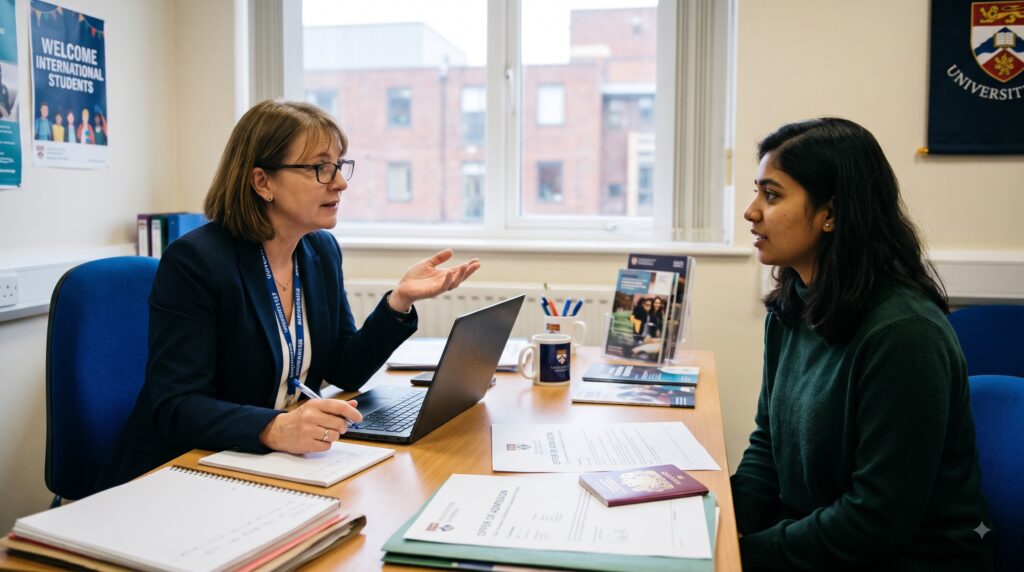
Planning to study in the UK for the January 2027 intake? Before starting your journey, you may need to complete a university Pre-CAS interview or a UKVI credibility interview. These interviews help the university or visa decision-maker understand your reasons for studying in the UK, your knowledge of the course and university, and your financial and career plans.
For Indian students, preparing in advance is important. You should understand your course details, tuition fees, scholarship information, university choice and Student visa requirements. Giving clear and honest answers can help you explain your study plans confidently.
A Confirmation of Acceptance for Studies (CAS) is an electronic record issued by a UK university or other licensed student sponsor to an eligible student. You need a valid CAS to apply for a UK Student visa.
A Pre-CAS interview is a university-level assessment that may take place before the CAS is issued. The university may ask about your academic background, course choice, finances and reasons for studying in the UK.
A UKVI credibility interview is different. UK Visas and Immigration (UKVI) may invite you to an interview while assessing your Student visa application. The purpose is to understand whether you are a genuine student and whether your plans are credible.
Not every student will have the same interview experience. The university decides its own Pre-CAS checks, and UKVI may request a credibility interview depending on the application.
19 Important UK CAS Interview Questions and Answers 2027
The following examples can help you prepare. Replace the sample details with your actual information. Do not memorise answers word for word.
1. Why do you want to study in the UK?
I chose the UK because it offers internationally recognised qualifications, a range of specialised courses and opportunities to develop practical knowledge. The course I selected matches my academic background and future career goals.
2. Why did you choose this particular university?
I selected [University Name] after researching its course structure, modules, teaching approach, facilities and student support. The programme matches the skills I want to develop, and the university offers a suitable academic environment for my goals.
3. Why did you choose this course?
I chose MSc [Course Name] because I want to develop my knowledge in [relevant subject area]. The modules, including [Module 1] and [Module 2], are relevant to my previous studies and the career I want to pursue.
4. What do you know about your course modules?
I reviewed the official course page and understand that the programme includes modules such as [Module 1], [Module 2] and [Module 3]. These subjects will help me improve my knowledge and practical understanding of the field.
5. Why did you choose the UK instead of studying in India?
I considered the study options available in India, but I found that this particular UK programme better matches my preferred specialisation and learning objectives. I also value its course structure and international academic exposure.
6. Did you consider any other universities?
Yes. I researched [University A] and [University B] before making my decision. I compared their course modules, tuition fees, location and entry requirements. I selected [University Name] because its programme is the best match for my academic and career plans.
7. How is this course related to your previous education?
My previous qualification is in [Your Subject]. During my studies, I developed an interest in [Relevant Area]. This course will allow me to build on that knowledge and gain more specialised skills.
8. What are your future career plans?
After completing my course, I plan to develop my career in [Career Field]. I am interested in roles such as [Job Role 1] or [Job Role 2]. The knowledge and skills from this programme will support my professional development.
9. Who will finance your education?
My studies will be funded by [my parents/myself/an approved education loan/a scholarship]. We have planned for the tuition fees, accommodation and living expenses. I can explain the source of the funds and provide the required supporting documents.
10. What are your tuition fees?
My course tuition fee is £[Amount], according to my university offer or CAS information. I have paid £[Amount], and the remaining balance is £[Amount]. I have reviewed the payment details and planned my finances accordingly.
11. Have you received any scholarship?
Yes, I have received a scholarship of £[Amount] from [University Name], which reduces my tuition fees. I have checked the scholarship conditions and understand how it applies to my course fees.
If you have not received a scholarship, answer honestly and explain how you plan to fund your studies.
12. Where will you stay in the UK?
I am planning to stay in [University Accommodation/Private Student Accommodation]. I have researched the accommodation options, approximate rent and distance from the university. I will finalise my arrangements based on availability and my budget.
13. What do you know about the city where your university is located?
My university is located in [City Name]. I researched the city’s accommodation options, transport facilities and general living expenses. I believe the location is suitable for my studies and budget.
14. Do you have any study gaps or work experience?
After completing my [Previous Qualification], I [worked at a company/prepared for further studies/undertook relevant training]. During this period, I gained experience in [Relevant Skills]. This experience helped me understand my career goals and decide to pursue this course.
If you have a study gap, explain the actual reason clearly and consistently with your application documents.
15. What are the English language requirements for your course?
I checked the English language requirements on the university’s official website. I met the requirement through [IELTS/PTE/another accepted qualification or assessment], with my result being [Score, if applicable].
16. Do you know the main conditions of a UK Student visa?
Yes. I understand that I must follow the conditions of my Student visa, study at my sponsoring institution and comply with the work restrictions that apply to my visa. I will also follow the university’s attendance and academic requirements.
17. Are you planning to work while studying in the UK?
My main purpose is to complete my course successfully. If I take up part-time work, I will follow the working-hour restrictions and other conditions stated on my visa. I have planned my finances without depending on part-time employment to pay my essential study costs.
18. Have you ever had a visa refusal or travelled abroad?
[Explain your actual travel and immigration history.] If you have had a previous visa refusal, explain the country, date and reason accurately. I understand the importance of providing complete and truthful information in my application.
19. Why should the university or UKVI consider you a genuine student?
I have carefully researched my course, university, tuition fees and future career plans. My chosen programme is connected to my academic background and professional goals. I understand the financial commitment and responsibilities involved in studying in the UK, and I am prepared to meet them.
How to Prepare for a UK CAS Interview
Preparing your answers in advance can help you communicate clearly and confidently. Follow these steps before attending your interview.
1. Understand Your University and Course
Read your university’s official course page. Know the course duration, modules, qualification level, campus location, tuition fees and course start date.
2. Research Your Financial Arrangements
Understand who is sponsoring your education and how your tuition fees and living expenses will be covered. Keep your financial documents consistent with the information in your application.
3. Review Your Academic Background
Be ready to explain your previous qualification, academic subjects, work experience and any study gaps. Your answers should match your application documents.
4. Practise Speaking in English
Practise answering questions aloud in your own words. Focus on clear communication rather than memorising long answers.
5. Prepare Your Documents
Keep your passport, university offer, CAS-related information, academic records, English language evidence and financial documents accessible when required by the university or visa process.
UK University Selection, Tuition Fees and Scholarships
Your university and course selection can influence the questions asked during a Pre-CAS or credibility interview. Students should research these details before accepting an offer.
Compare universities based on:
Course modules and specialisations.
Entry requirements and English language criteria.
Course duration and study structure.
Tuition fees and payment deadlines.
Scholarships and tuition fee discounts.
Accommodation and living expenses.
Location and student support services.
Scholarships may reduce your tuition costs, but eligibility and award amounts vary by university and academic year. Check the official university funding page and understand whether the scholarship is confirmed or still subject to approval.
UK Student Visa Requirements for January 2027 Intake
After receiving your CAS and meeting the university’s requirements, you can prepare your Student visa application.
The main requirements generally include:
A valid Confirmation of Acceptance for Studies (CAS).
A passport or other accepted travel document.
Evidence of meeting the English language requirement.
Evidence of sufficient funds, where required.
Additional documents based on your circumstances.
A tuberculosis test certificate, if required for your application.
Students must also understand the financial evidence rules. The required amount depends on outstanding course fees and the applicable living-cost requirement. Check the latest GOV.UK guidance before applying, as visa fees and financial thresholds can change.
A university Pre-CAS interview and a UKVI credibility interview are separate processes. Passing a university interview does not guarantee that a CAS or visa will be granted.
Common Mistakes to Avoid During a UK CAS Interview
Avoid these mistakes when preparing for your interview:
Memorising answers: Prepared scripts can make your responses sound unnatural.
Not knowing your course: Be familiar with the course modules, duration and study structure.
Giving incorrect financial information: Know your tuition fees, payments and funding source.
Not researching the university: Understand why you selected that institution.
Providing inconsistent answers: Your statements should match your application and supporting documents.
Ignoring study gaps: Be prepared to explain any gap honestly.
Depending on part-time work: Do not present part-time employment as your main source of tuition or living funds.
Missing interview instructions: Check your email, including spam folders, and follow the university’s or UKVI’s instructions.
Get Expert UK CAS Interview Guidance from Immitrics Overseas Consultancy
Preparing for a UK CAS interview requires a clear understanding of your course, university, finances and future plans. Students applying for the January 2027 intake should start preparing early and review all information before attending their interview.
Immitrics Overseas Consultancy supports students planning to study in the UK through profile evaluation, university selection, admission guidance, scholarship assistance and Student visa support.
Our team can help you understand the admission process, review important course details and prepare for common Pre-CAS interview topics based on your profile.
Planning to study in the UK in January 2027? Contact Immitrics Overseas Consultancy today and get expert university selection guidance for your study abroad journey.